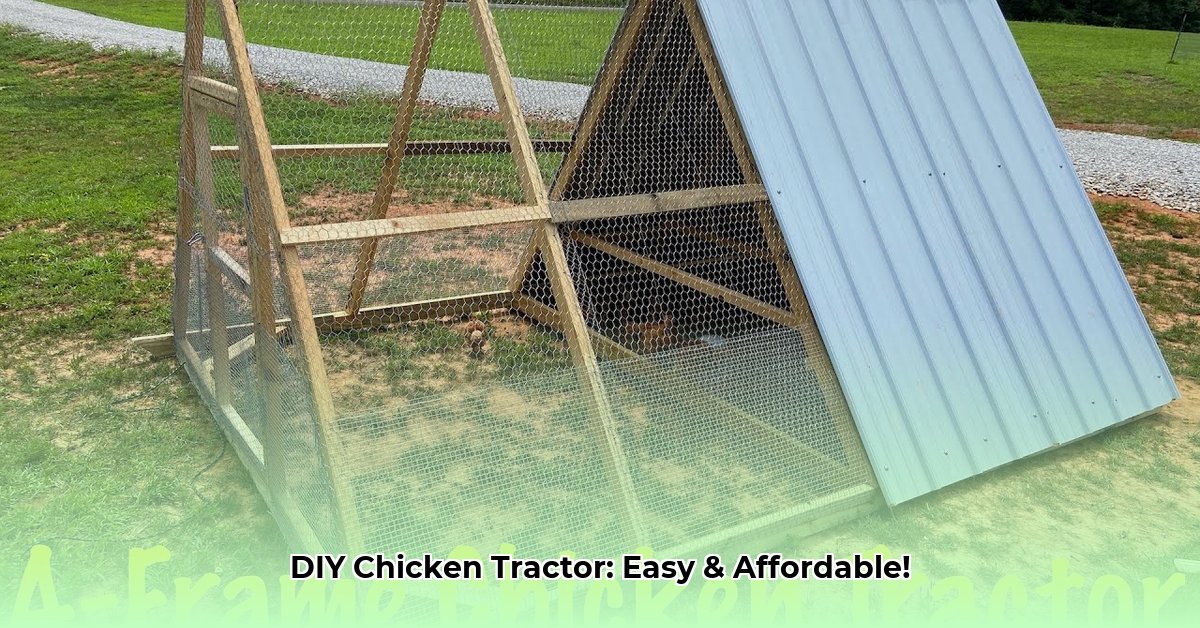
Want fresh, farm-fresh eggs without the worry of predators? Building your own chicken tractor is surprisingly achievable! This guide walks you through constructing a robust A-frame design—the ultimate mobile chicken coop. Even if DIY isn't your forte, this project is manageable with clear instructions and a touch of encouragement. For more detailed plans, check out this helpful guide. Let's build a chicken haven together!
Gathering Your Supplies: Laying the Groundwork
Before you begin, gathering all your materials is crucial. This saves you countless trips to the hardware store and keeps the project flowing smoothly. Trust me; mid-project supply runs are not fun!
| Material | Quantity (Adjust as Needed) | Notes |
|---|---|---|
| Treated Lumber (2x4s) | Based on your desired dimensions | Pressure-treated lumber resists rot and decay. Always better to have extra! |
| Plywood (Exterior Grade) | Based on your desired dimensions | Choose a thickness that provides sufficient strength and durability. |
| Wire Mesh (Heavy-duty, 1" x 1" or smaller) | Enough to enclose all sides. | Keeps chickens in and predators out. Consider hardware cloth for extra security. |
| Hinges (Heavy-duty) | At least 4, possibly more depending on door design. | Strong hinges ensure easy access. |
| Wheels (Heavy-duty, swivel) | 4 | Choose wheels with a weight capacity exceeding your expected tractor weight. |
| Screws (Exterior grade, various sizes) | Plenty! | A mix of lengths is essential for different applications. |
| Galvanized Steel (optional) | As needed | Use for reinforcing joints in high-stress areas. |
| Exterior-grade Paint or Stain | As needed | Protects the wood and adds a personal touch! |
| Pulley System (optional) | 1-2 | Significantly eases moving the tractor (highly recommended!). |
Building Your A-Frame: A Step-by-Step Journey
This section breaks down the construction into manageable steps. Remember, even experienced builders encounter minor challenges – it's part of the process!
Step 1: The Solid Base - Building the Foundation
Begin by constructing the sturdy base frame using your 2x4s. Accuracy is crucial here. Use a level to ensure everything is square and level before securing the heavy-duty wheels. A strong base ensures a stable, mobile tractor.
Step 2: Raising the Roof - Constructing the A-Frame Supports
Next, build the A-frame supports and attach them securely to the base. Pre-drilling holes prevents wood splitting. These supports create the iconic A-frame shape, providing ample headroom and protection for your chickens.
Step 3: Creating the Chicken Haven - Enclosing the Tractor
Now, enclose your chicken haven. Attach the plywood for the floor, ensuring a smooth and sturdy surface. Then, carefully attach the wire mesh to the sides and back, leaving no gaps for escapes. Double-check your work; even small gaps can lead to problems.
Step 4: Easy Access - Installing the Door(s)
Construct and attach at least one door using those heavy-duty hinges. Consider the size and placement for easy access to feed, water, and egg collection. A well-designed door simplifies daily care.
Step 5: Finishing Touches - Enhancing Protection and Aesthetics
Apply your chosen exterior paint or stain. This protects your wood from the elements and adds a personal touch. Installing a pulley system (if you chose to include one) significantly simplifies moving the tractor.
Troubleshooting: Anticipating Common Challenges
Even the best-laid plans can encounter unexpected bumps. Here are some common issues and solutions:
- Wood Warping: Pressure-treated lumber helps minimize warping. If warping occurs, reinforce with extra bracing.
- Wheel Wobbles: High-quality wheels are key. Inspect axles and wheel mounts for tightness. Loose connections often lead to wheel wobbles.
- Mesh Mayhem: Repair any tears immediately with zip ties or heavy-duty staples to prevent escapes or predator intrusions.
Don't let minor setbacks discourage you; problem-solving is part of the fun!
Moving Day: Providing Fresh Pasture
Regularly moving your chicken tractor (at least once a week) provides fresh pasture and prevents overgrazing. The wheels make this surprisingly easy! This also contributes to healthier, happier chickens.
A-Frame Chicken Tractor: Weighing the Pros and Cons
Pros:
- Mobility: Easily move chickens to fresh grazing areas.
- Predator Protection: The A-frame design offers superior protection.
- Cost-Effective: Building your own is significantly cheaper than buying pre-made.
- Customization: Tailor it to your needs and aesthetic preferences.
Cons:
- Time Investment: Building takes time and effort (plan for several days).
- DIY Skills Required: Basic woodworking skills are needed.
- Material Costs: The upfront cost of materials is an investment, but long-term savings are substantial.
This A-frame chicken tractor offers significant benefits for both your chickens and your garden. Building your own is a rewarding experience resulting in fresh eggs and healthy hens! Happy building!